
Cooklines and Fryer Areas
Pretreatment and agitation address grease film around cooking equipment, preparation zones, and the traffic lanes used by kitchen staff.
Serving Orlando, Florida & surrounding areas
Remove grease, tracked-in soil, and stubborn buildup with a cleaning plan designed around your kitchen, dining room, flooring, and operating schedule.
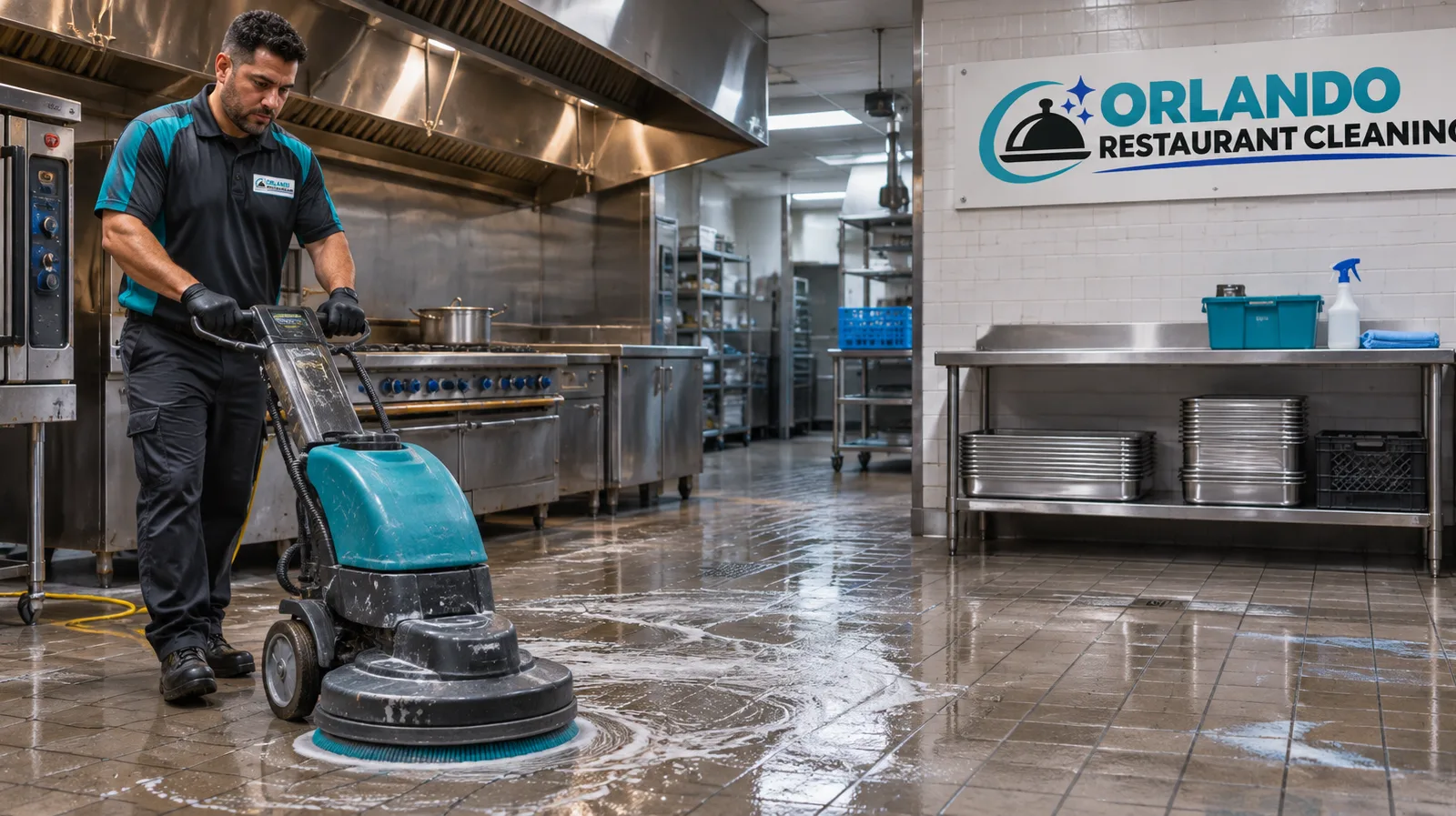
Restaurant Floor Cleaning Sanford calls for more than a quick mop at closing. Cooking oils settle near fryers and cooklines, residue collects along grout and wall edges, and foot traffic carries soil between the kitchen, service stations, dining room, and entrances. Once that film builds up, routine mopping can spread it instead of removing it.
Orlando Restaurant Cleaning approaches the work by flooring type, soil level, traffic pattern, and access. Our restaurant service specialists serving Orlando bring the same methodical approach to nearby Sanford properties while planning around each operation's hours and workflow. Before cleaning starts, the team reviews the treatment area, identifies heavy grease zones, checks sensitive surfaces, and agrees on what equipment can be moved.
Sanford restaurants near the walkable Historic Downtown area may deal with frequent entrance traffic and tightly arranged dining rooms. Businesses around Seminole Towne Center often have larger dining areas and broad kitchen traffic lanes. Waterfront food service near Lake Monroe can experience added tracked-in moisture during Central Florida's rainy periods. These differences affect matting, entry soil, drying needs, and the order in which floors should be cleaned.
Restaurant Kitchen Deep Cleaning Sanford targets the deposits that daily closing routines leave behind. The floor work can include pretreating greasy areas, applying a surface-compatible degreaser at the correct dilution, allowing suitable dwell time, agitating grout and textured flooring, extracting suspended soil, and rinsing away chemical residue. Edges, corners, equipment legs, floor-wall transitions, and reachable spaces beneath movable equipment receive direct attention.
Kitchen flooring is not all treated alike. Quarry tile and ceramic tile often need focused grout agitation. Sealed concrete requires a cleaner that will not unnecessarily attack the coating. Luxury vinyl tile, sheet vinyl, and resilient flooring need controlled chemistry and moisture. Epoxy-coated floors should be inspected for worn or damaged areas before aggressive scrubbing. A small test area can confirm compatibility when the finish or prior treatment is uncertain.
The goal is a clean, residue-controlled surface, not a temporarily shiny floor. Excess detergent left behind can attract soil and contribute to a slick feel. Thorough pickup and rinsing are therefore part of the process, along with adequate drying before staff resume normal traffic.
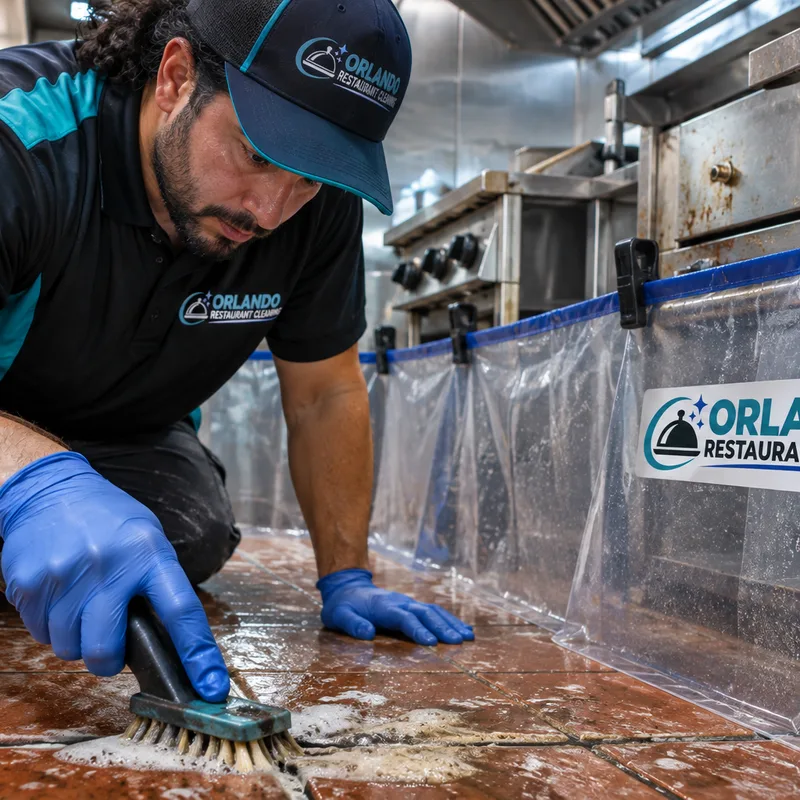
Pretreatment and agitation address grease film around cooking equipment, preparation zones, and the traffic lanes used by kitchen staff.
Detail work reaches porous grout, base edges, thresholds, equipment legs, and other areas that broad mop passes often miss.
Cleaning can be matched to tile, sealed concrete, resilient flooring, and other compatible surfaces in dining rooms, beverage stations, and server aisles.
Focused soil removal addresses entrances, host areas, pickup routes, and paths between the kitchen and dining room.
Where safe access is available, lightweight or mobile items can be repositioned so concealed food debris and greasy residue can be removed.
The floor surrounding accessible drains can be scrubbed and rinsed without claiming to replace drain repair, grease-trap service, or plumbing work.
The first step identifies flooring materials, grease concentration, grout condition, damaged coatings, access limits, floor drains, and areas that must remain available.
The cleaning sequence is planned around food preparation, closing duties, deliveries, staff traffic, and the time required for safe drying.
Loose debris is removed, approved movable items are repositioned, and nearby surfaces or equipment are protected as needed. Permanently connected cooking equipment stays in place unless qualified personnel handle it.
Surface-compatible chemistry is applied where needed and given time to work. Mechanical scrubbing and hand detailing break up film in open areas, grout, corners, and edges.
Loosened soil and cleaning solution are recovered, followed by rinsing when appropriate. The crew checks for remaining residue and leaves the agreed treatment areas ready to dry.
A practical cleaning plan respects the operating schedule. Many kitchens need work after food production ends, while dining rooms may be treated in stages so furniture can be moved without blocking the whole space. The agreed start time should account for breakdown duties, chemical dwell time, extraction, rinsing, and drying. A rushed finish can leave moisture or residue in active traffic lanes.
Central Florida's humid weather can slow natural drying, particularly in enclosed kitchens with limited air movement. Air conditioning and approved air movers may help, but staff should wait until the treated floor is dry before reopening the area to normal traffic. Wet-floor controls should remain in place throughout cleaning and drying.
Sanford's restaurant mix includes compact downtown dining rooms, freestanding locations, and larger commercial spaces near major roads such as State Road 46 and Interstate 4. A useful proposal should reflect actual square footage, equipment access, floor condition, cleaning frequency, and the number of separate treatment zones rather than relying on a generic package.
The right scope depends on what the floor needs now and how quickly buildup returns. A one-time deep clean may suit a kitchen preparing for a reopening, management change, seasonal rush, or reset after deferred maintenance. Recurring service can keep grease and embedded soil from reaching the same level again. Frequency depends on cooking volume, menu, flooring texture, entrance traffic, staffing routines, and the effectiveness of daily mopping.
Ask what is included before approving the work. A written scope should identify treatment areas, excluded surfaces, equipment-moving limits, expected preparation, cleaning methods, and scheduling assumptions. It should also distinguish floor cleaning from hood cleaning, grease-trap pumping, pest treatment, plumbing, coating repair, and other specialized work.
Sanford food establishments operate within Seminole County, and cleaning should fit the restaurant's established food-safety procedures. Cleaning tools and chemicals must be managed to avoid contaminating exposed food, utensils, preparation surfaces, and storage areas. Staff should secure those items before work begins, and safety data sheets should be available for the products used.
Describe the floor materials, problem areas, approximate treatment space, and preferred service window to receive a scope built around your restaurant's actual conditions.
Call for a Free QuoteRestaurant floor cleaning in Sanford is priced according to square footage, floor material, soil level, access, and the amount of detail work required. Heavy grease around fryers, deeply soiled grout, multiple rooms, equipment movement, and restricted overnight windows can increase labor. A walk-through or a clear description with current photos helps establish an accurate written scope.
Yes, after-hours cleaning can be planned when the requested time allows for preparation, degreasing, agitation, recovery, rinsing, and drying. Central Florida humidity and limited kitchen airflow can affect drying time, so the schedule should leave a realistic buffer before employees return.
A floor-focused deep clean may take several hours, but the actual duration depends on area size, grease buildup, grout condition, equipment access, and the number of separate zones. A compact Historic Downtown Sanford kitchen and a larger restaurant near Seminole Towne Center can require very different crew plans.
Lightweight or mobile equipment may be moved when it is safe and included in the scope, but connected gas, electrical, refrigeration, or plumbing equipment generally requires qualified handling. The access plan should be settled before service so the crew knows which concealed floor areas can be reached.
Quarry tile and grout can usually be deep cleaned with compatible chemistry, controlled dwell time, agitation, recovery, and rinsing. Existing grout deterioration, loose tiles, failed sealers, or damaged coatings should be identified first because cleaning cannot repair those conditions.
The appropriate frequency depends on cooking volume, grease production, floor texture, entrance traffic, and daily maintenance results. A high-output fryer kitchen may need more frequent attention than a lower-grease operation, while rainy Central Florida conditions can increase tracked-in soil and moisture at entrances.
No, professional floor cleaning supplements rather than replaces daily sweeping, spot cleaning, and mopping. Daily work controls fresh soil, while periodic mechanical agitation and extraction address residue and embedded buildup that ordinary mop procedures may leave behind.
Staff should finish food production, secure exposed food and utensils, remove loose floor items, empty accessible waste, and confirm which equipment may be moved. Clear access to the agreed areas reduces delays and helps keep cleaning tools away from food-contact surfaces.
Tell Orlando Restaurant Cleaning about your Sanford kitchen, dining area, floor materials, grease concerns, and operating hours. The next step is a clear scope and a practical service plan.