
Toilets, Urinals, and Partitions
Clean and disinfect toilet and urinal surfaces, including seats, flush controls, partition touchpoints, and nearby splash areas. Mineral buildup or staining can be identified for separate corrective attention.
Serving Orlando, Florida & surrounding areas
Keep every restroom sanitary, stocked, and ready for guests with a cleaning plan built around your operating hours, traffic, and facility.
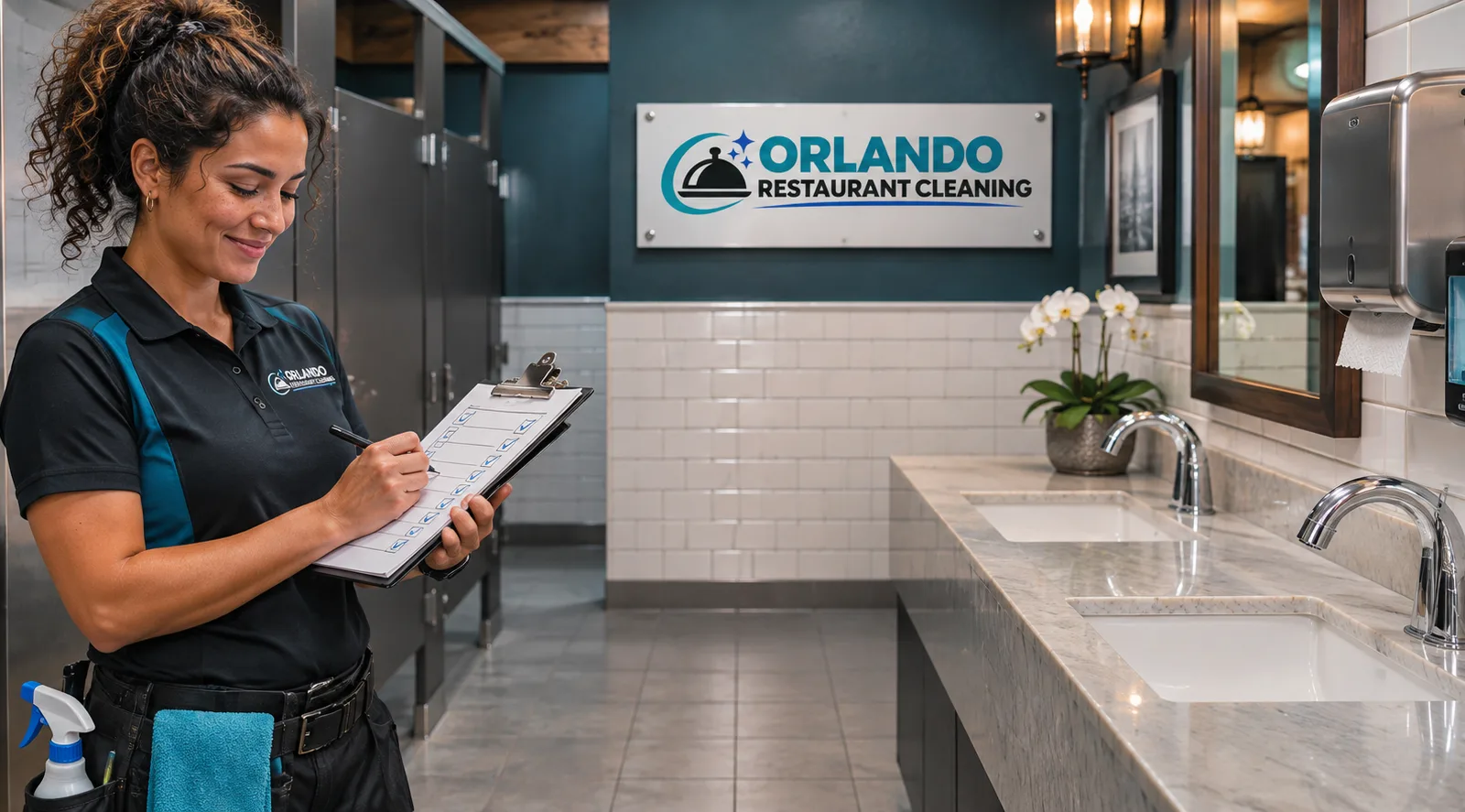
Restaurant Bathroom Cleaning Winter Park requires more than a quick wipe of the sink and mirror. Guests notice odors, empty dispensers, wet floors, overflowing waste bins, and visibly soiled touchpoints. Orlando Restaurant Cleaning addresses those details through repeatable restroom procedures tailored to your restaurant's traffic and operating schedule.
Our team cleans guest and employee restrooms without treating every facility alike. A compact dining room near Park Avenue may need focused work around short, busy service periods, while a restaurant serving Winter Park Village may have sustained traffic that calls for a different schedule. We review fixture counts, floor materials, access windows, supply responsibilities, and recurring trouble spots before defining the work.
We use written task expectations and practical communication as a professional restaurant service company in Orlando to keep recurring work consistent. Our Orlando base also gives Winter Park operators a clearly identified company for scheduling, scope changes, and service concerns.
Clean and disinfect toilet and urinal surfaces, including seats, flush controls, partition touchpoints, and nearby splash areas. Mineral buildup or staining can be identified for separate corrective attention.
Remove soap residue, water spots, fingerprints, and visible soil from basins, faucets, counters, mirrors, and dispenser exteriors. Compatible products are selected for the installed surface.
Treat door handles, locks, push plates, grab bars, flush controls, faucet handles, and other frequently touched areas after visible soil has been removed.
Vacuum or sweep loose debris, then clean the floor with attention to corners, edges, grout lines, and areas around fixtures. Wet-floor controls remain part of safe work practices.
Empty receptacles, replace liners, and replenish agreed supplies such as soap, toilet tissue, and paper towels from the restaurant's stock.
Address common odor sources around fixtures, floor drains, waste bins, and grout rather than relying on fragrance to cover an unresolved sanitation issue.
A disinfectant works properly only when staff follow its label. Visible soil is removed before disinfection, and the treated surface must remain wet for the product's listed contact time. Using the right concentration and allowing sufficient dwell time matter more than simply spraying and wiping immediately.
Product compatibility matters as well. Acidic chemicals can harm some stone and grout, abrasive tools may scratch polished fixtures, and mixing chemicals can create dangerous reactions. We separate tools by use area, follow label directions, and avoid using the same cloth indiscriminately across toilets, counters, and dispensers.
Florida's warm, humid conditions can make persistent restroom odors more noticeable, especially where moisture remains around grout, fixture bases, or drains. Detailed cleaning targets the source. Fragrance may improve the immediate impression, but it does not replace soil removal, drain attention, or a review of leaking and damaged components.
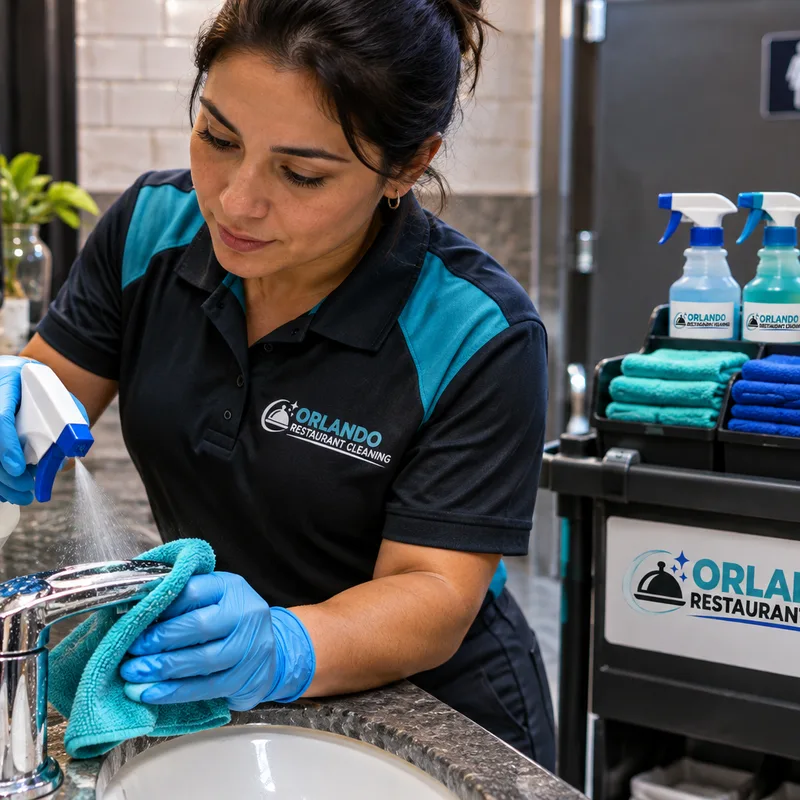
We review the guest and employee restrooms, fixture count, surface types, current condition, supply storage, entry procedure, and suitable cleaning windows. This is also the time to flag damaged dispensers, recurring odors, or unusual buildup.
The service plan identifies the tasks, frequency, access arrangements, and responsibility for consumable supplies. Work can be timed around opening, closing, or another agreed window so restroom care fits restaurant operations.
The crew follows an ordered procedure that limits cross-contamination. Waste removal, surface cleaning, disinfection, floor care, restocking, and a final visual check are completed according to the agreed scope.
Concerns are documented and addressed through a defined point of contact. If traffic, hours, or restroom conditions change, the schedule and task list can be reviewed rather than allowing an outdated plan to continue.
Restaurant traffic in Winter Park varies sharply by location and concept. Park Avenue restaurants may face concentrated restroom use around lunch, dinner, and weekend dining periods. Businesses near Rollins College can experience event-related or academic-calendar shifts, while operators around Winter Park Village may need coverage suited to retail and entertainment traffic.
Those differences affect frequency and timing. A restroom that looks good before opening can deteriorate quickly during a rush if trash capacity, supply levels, or touchpoint cleaning is inadequate. We use the walkthrough to identify pressure points and recommend a practical recurring schedule. Where a restaurant handles daytime checks internally, our crew can focus on a thorough after-hours reset. Where traffic remains steady, the scope can account for added service frequency.
Guest restroom work remains distinct from dining-room, kitchen, and other facility tasks. If your needs extend beyond the restroom, they can be discussed as separate scope items without diluting the bathroom-specific checklist.
A useful cleaning agreement states what gets cleaned, how often it gets cleaned, and who handles restroom consumables. It should also define access, alarm or key procedures, reporting expectations, and how additional work is approved. Clear scope language prevents routine cleaning from being confused with repair, restoration, or specialty treatment.
Our cleaners can report visible conditions such as leaking fixtures, loose toilet seats, failed dispensers, damaged caulk, or recurring drain odors. Cleaning does not replace plumbing, pest control, mold remediation, or fixture repair. Early reporting gives management an opportunity to send the issue to the appropriate trade before it becomes a larger guest concern.
Consistency also depends on realistic access. Restrooms should be available for the agreed service window, and stored supplies should be identifiable and reachable. If employees or customers remain in the building, the plan should address restroom closure signs and safe floor-drying time.
Get a written restroom scope based on your fixture count, traffic, condition, and preferred service window before recurring work begins.
Call for a Free QuotePricing is usually based on restroom size, fixture count, service frequency, current condition, access, and whether consumable restocking is included. A compact pair of restrooms that receives frequent service requires a different scope than several heavily used facilities with grout buildup or extended access procedures. Orlando Restaurant Cleaning reviews the Winter Park location before confirming a written price.
Yes, after-hours cleaning may be scheduled when access and operating arrangements allow it. Many restaurants prefer a post-closing reset so floors can dry and the restroom is prepared for the next service period. The walkthrough establishes entry, key or alarm procedures, lighting, supply access, and the time by which work must be complete.
The right frequency depends on guest volume, operating hours, fixture count, and how much restroom care employees perform during service. A Park Avenue dining room with concentrated meal-period traffic may need a different plan than a lower-volume operation. We assess those conditions and define a recurring schedule rather than applying one frequency to every restaurant.
Restocking can be included when the responsibility and storage arrangement are stated in the scope. The restaurant typically provides its chosen consumables unless another arrangement is confirmed. Supplies should be stored in an accessible location, and low stock can be reported so management has time to reorder.
High-touch disinfection can be included in each scheduled visit as part of the written checklist. Handles, locks, flush controls, faucet handles, dispenser exteriors, and grab bars are common targets. Surfaces are cleaned first, and disinfectants are used according to label directions, including the required wet contact time.
Routine cleaning can resolve odors caused by soil, waste, residue around fixtures, dirty grout, or neglected floor drains. Odors tied to dry traps, plumbing faults, leaks, damaged seals, pests, or concealed moisture require the appropriate repair or specialty contractor. We can document visible warning signs for restaurant management.
Yes, employee and guest bathrooms can be included in one facility-specific scope. Each restroom is evaluated by its fixtures, surfaces, use level, and access. Back-of-house restrooms may have different soil conditions than guest facilities, so their task lists can be adjusted while keeping the work centered on restroom cleaning.
Tell Orlando Restaurant Cleaning about your restroom layout, operating hours, current concerns, and preferred frequency. We will review the facility and define a practical scope that keeps it sanitary, stocked, and ready for guests.