
Cooking Equipment
Ranges, ovens, griddles, fryers and broilers often collect polymerized grease and carbon. Cleaning focuses on safe, reachable areas after shutdown and complete cooldown.
Serving Orlando, Florida & surrounding areas
Remove baked-on grease and food residue from hard-working kitchen equipment with a practical cleaning plan built around your operating schedule.
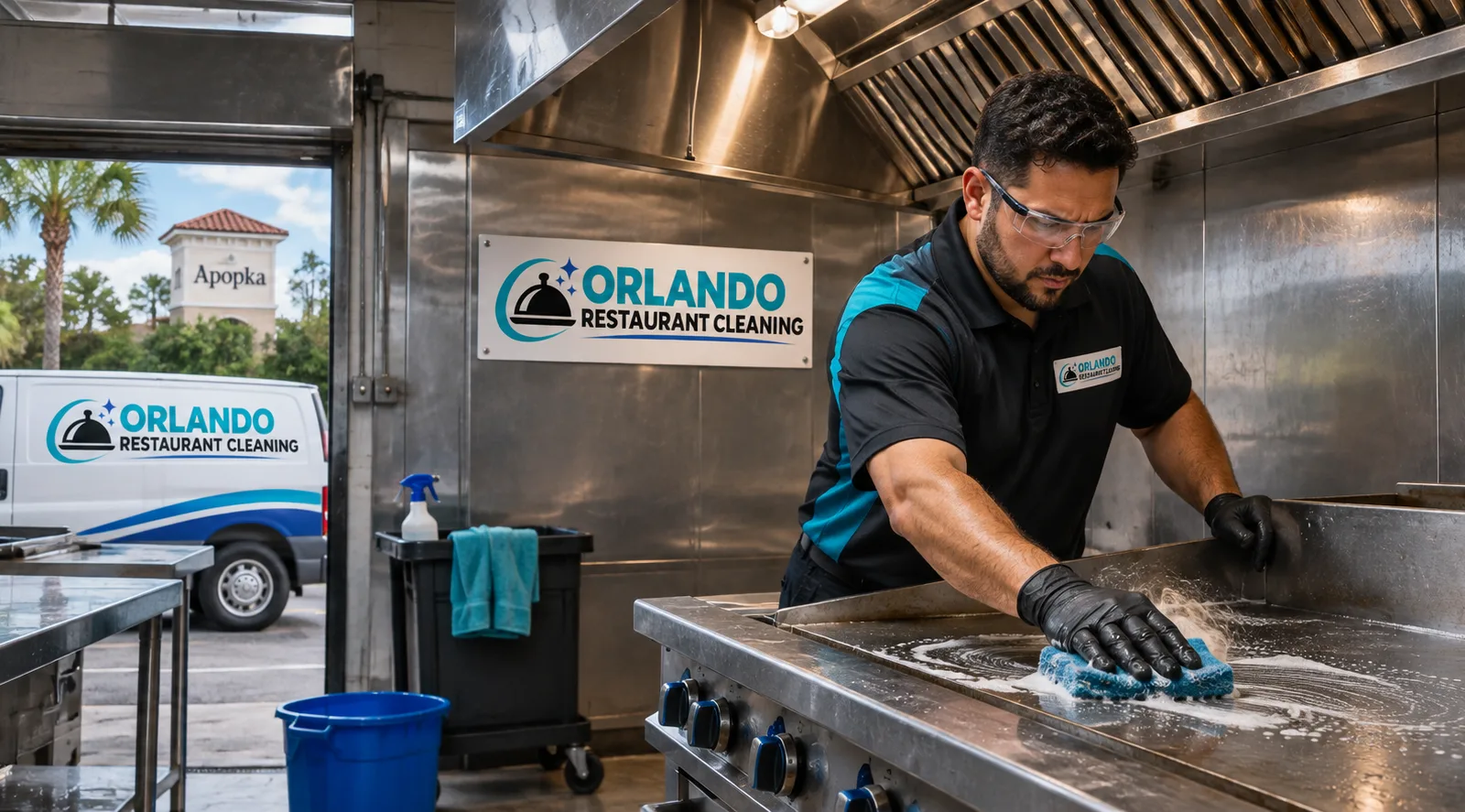
Restaurant Equipment Cleaning Apopka addresses the grease, carbonized food and sticky residue that routine wiping leaves behind. Orlando Restaurant Cleaning works on accessible commercial cooking, preparation, holding and warewashing equipment, with the scope set according to the equipment type, condition and manufacturer guidance.
Our crew can clean exterior panels, control surrounds, removable components, undersides and other reachable surfaces included in the agreed scope. We distinguish cleaning from repair and maintenance: damaged wiring, failing seals, loose gas connections and malfunctioning controls belong with a qualified equipment technician. For each job, an experienced restaurant service team in Orlando plans the work around kitchen access, cooldown time and the need to protect food-contact areas.
Apopka kitchens contend with a warm, humid Central Florida climate. Grease films and food residue should not be left to collect around seams, casters and equipment sides. A scheduled program keeps buildup manageable and reduces the amount of disruptive deep cleaning required later.
The exact equipment list is documented before work starts. Common scopes include ranges, griddles, fryers, ovens, salamanders, steam tables, warming cabinets, prep tables, sinks, exterior refrigeration surfaces and accessible warewashing equipment. Removable racks, trays, grease cups, burner grates and splash guards may be cleaned when their materials and condition permit.
Different soils require different methods. Degreasers help loosen fats and oils, while dwell time allows the product to work before agitation. Carbon deposits may need careful hand scraping with tools selected to avoid damaging stainless steel or coated surfaces. Food-contact surfaces require compatible products and a proper rinse or other treatment directed by the product label. Electrical components, heating elements, data plates, sensitive controls and open connections must be protected.
Canopies, ducts and exhaust fans are separate from equipment detailing and may require specialized exhaust-system work. Our written scope identifies what is included so managers can coordinate any additional kitchen services without confusing responsibilities.
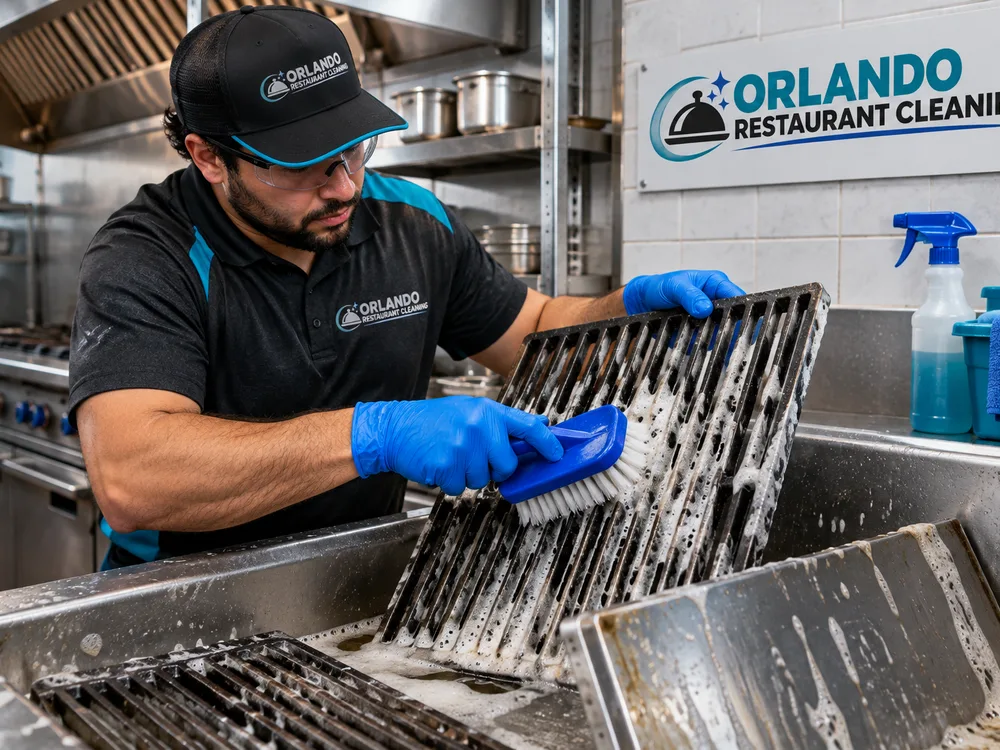
Ranges, ovens, griddles, fryers and broilers often collect polymerized grease and carbon. Cleaning focuses on safe, reachable areas after shutdown and complete cooldown.
Prep tables, steam tables, warming cabinets and shelving can be detailed around seams, legs, casters and removable parts where crumbs and grease accumulate.
Doors, handles, gaskets and accessible exterior panels may be cleaned without interfering with refrigeration components. Internal mechanical service is outside the cleaning scope.
Accessible exterior surfaces, splash zones and removable components can be addressed with products suitable for the material and the manufacturer's instructions.
Recurring visits can divide equipment into practical cleaning rotations, helping managers prevent heavy accumulation without shutting down the whole line at once.
A heavier initial visit may be appropriate after a management change, before reopening, or when deferred cleaning has left substantial grease and residue.
We identify the units to be cleaned, review access and note sensitive components, damaged surfaces or items that may require a repair technician before cleaning.
The kitchen establishes a workable service window. Hot equipment is turned off and allowed to cool, while staff remove food, utensils, smallwares and loose inventory from the immediate area.
Nearby food-contact surfaces and sensitive controls are protected as appropriate. The crew selects chemicals, pads, brushes and scrapers for the equipment materials and soils.
Approved products are applied according to their labels. The team uses controlled dwell time and agitation, then cleans accessible panels, edges, removable parts and buildup points included in the scope.
Treated surfaces are rinsed or finished as the product directions require, then dried. A final review identifies completed work and any damage or maintenance concern noticed during cleaning.
Restaurant staff or an authorized equipment professional handles startup when required. Cleaning personnel do not certify gas, electrical or mechanical operation.
Downtown Apopka businesses may need carefully timed work because kitchens can have compact back-of-house layouts and limited staging space. Cleaning one equipment group at a time helps preserve a safe path for staff and supplies.
Restaurants near the State Road 436 corridor often plan service outside meal periods so cleaning does not conflict with deliveries or customer traffic. Operations near the US 441 corridor may have larger equipment lines or drive-through schedules, making a documented shutdown sequence especially useful. Kitchens serving the Wekiva area may see pronounced weekend demand, so managers often prefer cleaning before a busy period rather than after residue has hardened for another cycle.
These operating details affect access and timing, not the standard of work. Every job still starts with equipment identification, surface assessment and a clear separation between cleaning tasks and technical repairs.
Commercial equipment combines stainless steel, aluminum, coated panels, rubber gaskets, glass, control components and high-temperature cooking surfaces. One aggressive chemical or abrasive pad is not appropriate for all of them. Chloride-containing products can contribute to stainless-steel damage when misused, harsh abrasives can scratch finishes, and excess liquid can reach controls or electrical openings.
A sound cleaning plan follows the equipment manual and chemical label. Safety Data Sheets should be available for workplace cleaning chemicals, and staff should follow the required personal protective equipment and ventilation instructions. Cleaning chemicals must never be mixed unless their labels specifically permit it. In particular, chlorine products and acids or ammonia-based products can release dangerous gases when combined.
Managers should also separate visible cleanliness from sanitation, pest control and mechanical servicing. Cleaning removes soil. Sanitizing uses an appropriate product and method on a previously cleaned surface when the scope calls for it. Pest activity, damaged seals, unstable casters, frayed cords and gas concerns require the appropriate specialist.
A written equipment list and planned service window make it easier to price the work, prepare the kitchen and avoid preventable interruptions.
Call for a Free QuotePricing depends on the number and type of units, buildup level, access, removable components and the service window. A lightly soiled stainless prep unit takes less work than a fryer bank with hardened grease around casters and adjacent panels. Photos and an equipment list help define an initial scope, while the final price should reflect actual site conditions.
Some exterior detailing may be possible during quiet periods, but hot-line deep cleaning generally requires shutdown, cooldown and separation from food preparation. Apopka restaurants with long operating hours can often divide the equipment into zones or arrange work outside peak service. The manager remains responsible for deciding when each unit can be released for cleaning.
The time depends on equipment quantity, soil condition and access, so a small group of units may take a few hours while a heavily soiled line can require a longer service window. Cooldown, disassembly permitted by the manufacturer, chemical dwell time and drying all affect the schedule. The proposed scope should identify realistic access and completion windows before work begins.
Yes. Staff should remove food, utensils, pans, smallwares and loose stock from the work zone before the crew arrives. Equipment should be shut down and cooled according to management and manufacturer procedures, and a responsible contact should confirm access. Clear aisles are especially helpful in compact downtown Apopka kitchens.
No. Cleaning is limited to parts that are safe and appropriate to access under the agreed scope and manufacturer guidance. Gas valves, wiring, internal electrical assemblies and mechanical components may require a qualified technician. The cleaning crew should stop and report damage rather than disassemble or repair a component outside its role.
The right frequency follows cooking volume, menu, equipment design and the rate of grease accumulation. High-use fryers and griddles may need more frequent attention than holding cabinets or lightly used prep equipment. Daily staff cleaning should continue between professional visits, with recurring deep cleaning scheduled before buildup becomes difficult to remove.
Equipment cleaning does not automatically include the full kitchen exhaust system. Hood interiors, filters, ducts and fans have different access and fire-safety considerations, so they should be identified separately and assigned to a properly qualified provider. Clarifying the boundary prevents gaps between the cooking line and the exhaust system.
Tell Orlando Restaurant Cleaning which equipment needs attention, when the kitchen can provide access and where buildup is heaviest. We will help define a practical scope for your Apopka operation before work begins.