
Dining Rooms and Guest Areas
Floors, tables, chairs, glass, ledges, host areas, and agreed high-touch surfaces receive consistent attention so the room is ready for the next service period.
Serving Orlando, Florida & surrounding areas
Detailed kitchen, dining room, restroom, and floor cleaning built around your operating hours, facility needs, and food-service environment.
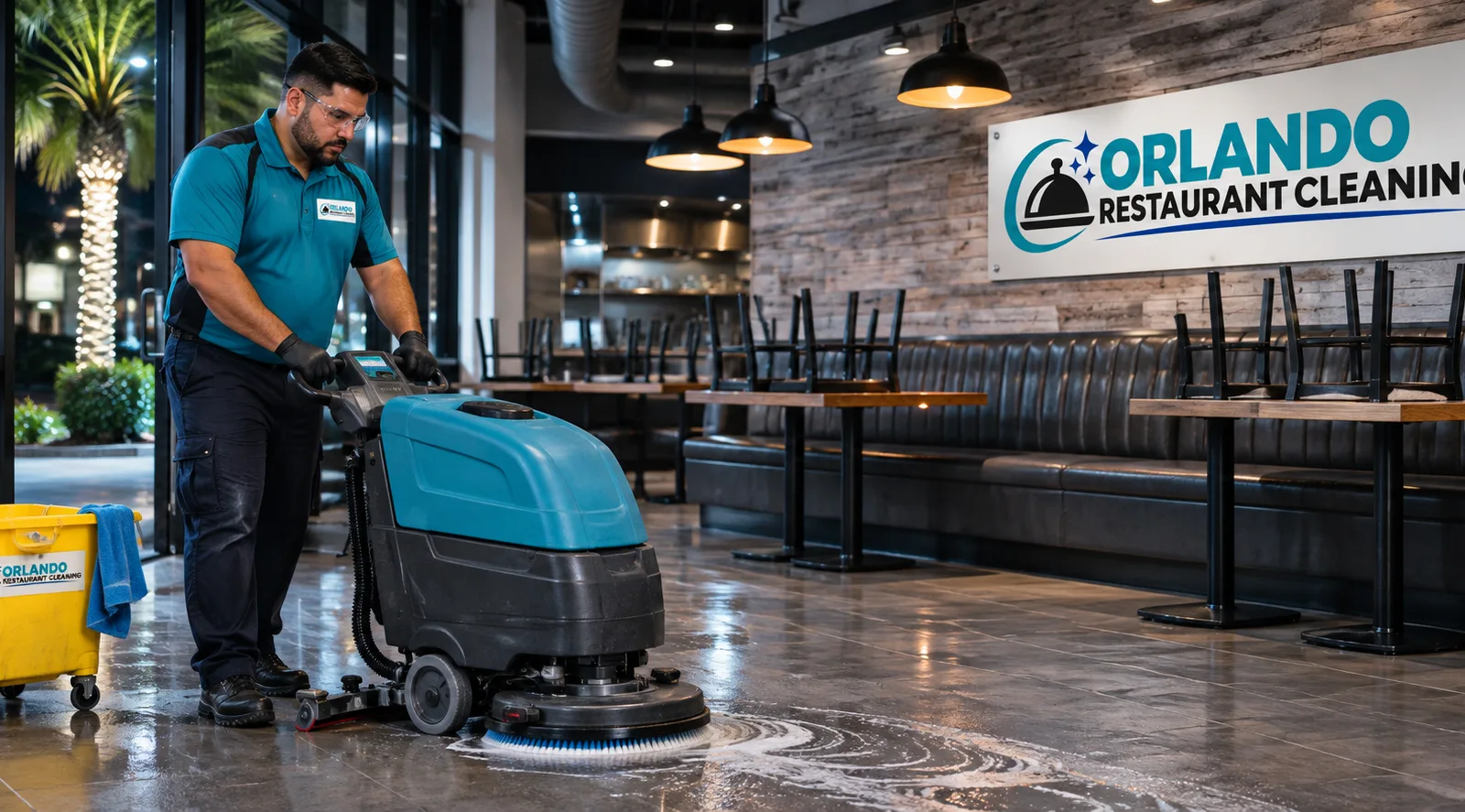
Restaurant Cleaning Services Kissimmee should support a clean guest experience without getting in the way of service, prep, or closing duties. Orlando Restaurant Cleaning develops recurring and one-time scopes for independent restaurants, quick-service locations, cafés, bars, and multi-unit operations. Work can cover dining rooms, front-of-house touchpoints, restrooms, kitchen floors, and other agreed areas.
We are a professional restaurant service company in Orlando, FL that plans each job around the facility rather than relying on a generic checklist. Before work begins, we identify cleaning priorities, floor materials, access procedures, service frequency, and the hours available after closing or before opening. That planning matters in Kissimmee, where restaurants near US 192 and the tourism corridor may have long operating hours and heavy guest traffic.
A written scope keeps responsibilities clear. It can distinguish nightly cleaning from scheduled detail work and identify exclusions, approved products, access arrangements, and reporting procedures. Managers know what the crew is assigned to clean, while cleaners arrive with a practical work plan.
Front-of-house cleaning commonly includes vacuuming or mopping floors, cleaning tables and chair surfaces, wiping host stands, addressing fingerprints on glass, emptying waste containers, and cleaning accessible touchpoints. Restroom work may include toilets, urinals, sinks, mirrors, partitions, fixtures, floors, and supply checks when restocking is included in the agreement.
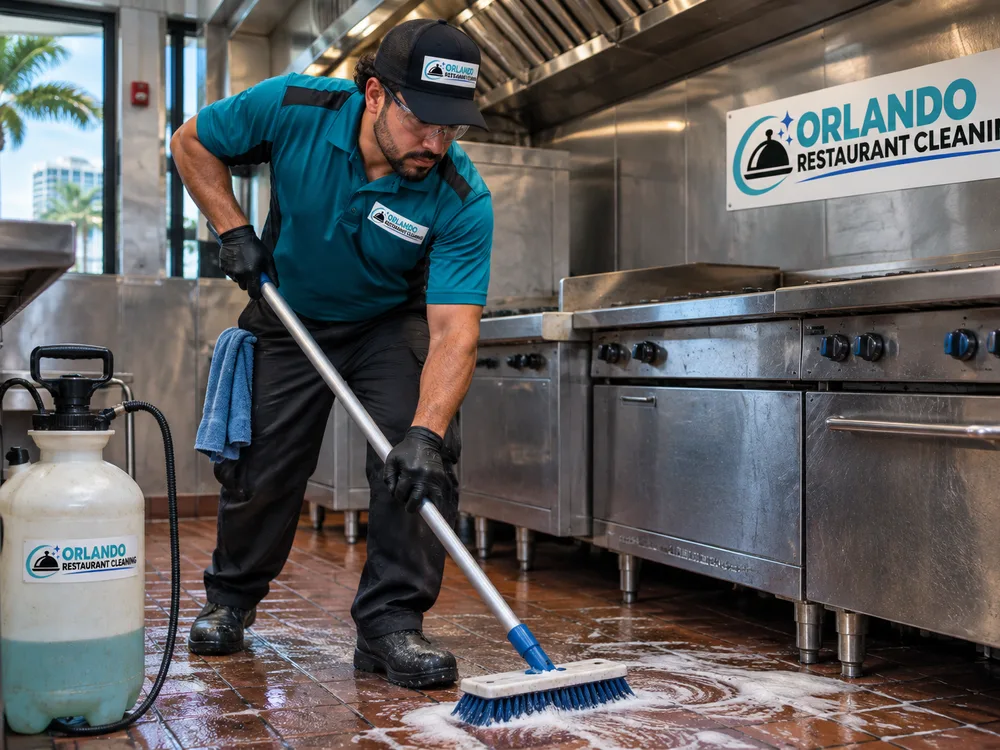
Kitchen cleaning requires a different approach. Typical tasks include degreasing accessible prep-area surfaces, cleaning exterior equipment panels, scrubbing floor edges, mopping with a suitable degreaser, and cleaning floor drains when they are part of the scope. Food-contact surfaces require products and procedures appropriate for those surfaces, including the labeled dilution and contact time. Staff should keep cleaning chemicals separate from food and food-contact items.
Some jobs require periodic detail work rather than nightly attention. Examples include machine scrubbing hard floors, cleaning under movable equipment, addressing baseboards, washing walls in splash-prone areas, and removing buildup around table bases. Exhaust hood and duct cleaning is specialized work and should be separately identified rather than assumed to be part of routine janitorial cleaning.
Floors, tables, chairs, glass, ledges, host areas, and agreed high-touch surfaces receive consistent attention so the room is ready for the next service period.
Crews address grease film, tracked soil, corners, edges, and accessible areas beneath movable items using methods suited to the floor material.
Fixtures, partitions, mirrors, touchpoints, waste containers, and floors are cleaned according to the agreed frequency, with supply checks added when requested.
Periodic work targets buildup on baseboards, walls, floor edges, table bases, accessible equipment exteriors, and other areas outside the nightly routine.
Service windows can be planned around operating hours, alarm procedures, key control, and manager access requirements.
A clear task list defines which areas are covered, how often work occurs, and which specialty services require separate arrangements.
Kissimmee restaurants face cleaning demands tied to guest volume, extended operating schedules, and Central Florida weather. Locations along the US 192 corridor can experience frequent customer turnover, which may call for greater attention to entrances, dining-room floors, restrooms, and waste areas. Downtown Kissimmee businesses may have tighter access or parking arrangements, so arrival times and equipment unloading should be confirmed before service starts.
Florida's humid, rainy conditions also affect floor care. Water and soil tracked through entrances can leave residue on hard floors and increase slip concerns. Entry mats need routine attention, and crews should use wet-floor controls while cleaning. Products and pads must match the surface because ceramic tile, luxury vinyl tile, sealed concrete, quarry tile, and grout do not respond to the same method.
Restaurants near Kissimmee's visitor accommodations may operate later than a typical office or retail property. A workable plan accounts for delayed closings, weekend traffic, vendor deliveries, and the time kitchen staff need to finish breakdown. The cleaning window should be realistic enough for the assigned tasks rather than compressed into an arbitrary schedule.
The walkthrough identifies square footage, floor types, kitchen conditions, restrooms, access points, storage limits, and the areas that need routine or periodic attention.
Tasks are assigned by area and frequency. The plan also records service windows, access instructions, approved products, equipment needs, and any work that is excluded.
The first visit establishes the working routine and may require extra attention if grease, soil, or edge buildup is present. Any condition that changes the expected work can be documented for the manager.
Managers can report priorities or recurring trouble spots, and the scope can be adjusted when operating hours, menu activity, traffic, or facility use changes.
Restaurant cleaning is more than making surfaces look tidy. Chemical labels specify dilution, dwell time, compatible surfaces, personal protective equipment, and whether rinsing is required. Mixing chemicals can create dangerous reactions, so products should remain labeled and be used only as directed. Safety Data Sheets should be available for the chemicals used at the facility.
Cross-contamination controls matter as well. Color-coded cloths or tools can help separate restroom work from kitchen and dining-room tasks. Cleaning equipment used in greasy back-of-house areas should not move directly into guest areas without proper cleaning. Mop water, pads, and cloths need to be changed when they become heavily soiled rather than carrying residue through the building.
Florida food establishments are regulated by the agency appropriate to their operation, including the Florida Department of Business and Professional Regulation for many public food-service establishments. A cleaning contractor does not replace management's food-safety responsibilities or required employee sanitation procedures. The contractor's role is to complete the agreed cleaning tasks reliably and document concerns that fall outside that scope.
Share your operating hours, cleaning priorities, and problem areas to receive a practical scope designed around your Kissimmee restaurant.
Call for a Free QuoteRestaurant cleaning is usually priced after a walkthrough because square footage, frequency, soil level, floor material, and the kitchen scope can change labor significantly. A small front-of-house cleaning assignment differs from nightly service covering dining areas, restrooms, and greasy kitchen floors. Access time and periodic detail work also affect the proposal. Orlando Restaurant Cleaning confirms the price in a written scope after reviewing the facility.
Yes, service can be scheduled after closing or before opening when access and enough working time are available. Kissimmee restaurants with late hours or variable closing times should establish a realistic arrival window, alarm procedure, key or lockbox protocol, and manager contact process. The schedule should also allow kitchen employees to complete their breakdown before cleaning begins.
Routine janitorial cleaning generally does not include internal exhaust hood, fan, or duct cleaning unless that specialized work is specifically quoted. Accessible hood exteriors may be included in a defined kitchen scope. Internal grease-removal service requires appropriate equipment and procedures, so managers should verify exactly which hood surfaces and components are covered.
Cleaning can be planned to avoid active preparation, but the safest arrangement is usually a dedicated window after food is covered or removed and employees have finished using the area. Chemicals, tools, and wastewater must be controlled around food and food-contact surfaces. If daytime service is required, the facility and crew should agree on isolated work zones before cleaning starts.
The right frequency depends on traffic, hours, menu, grease production, floor type, and what employees clean during each shift. High-traffic dining rooms and restrooms may need service several times per week or nightly, while wall washing, floor-edge work, and cleaning under movable equipment may follow a periodic schedule. A walkthrough can separate daily priorities from weekly and monthly tasks.
Managers should confirm access, alarm instructions, approved storage areas, service hours, floor materials, chemical restrictions, and which equipment can be moved. Food, utensils, and sensitive items should be stored or protected before kitchen cleaning begins. Identifying floor drains, water access, waste disposal procedures, and existing damage also helps the first visit run efficiently.
Tell Orlando Restaurant Cleaning about your facility, operating schedule, and priority areas. We will help define a clear scope for routine service or a scheduled deep clean.