
Kitchen Deep Cleaning
Degreasing and detailed cleaning can address cook-line surroundings, equipment exteriors, stainless steel surfaces, prep areas, walls, shelving, floors, base edges and accessible areas behind or beneath movable equipment.
Serving Orlando, Florida & surrounding areas
Detailed cleaning for commercial kitchens, walk-in coolers, dining areas and hard-to-reach surfaces, scheduled around your operating hours and documented with a clear scope.
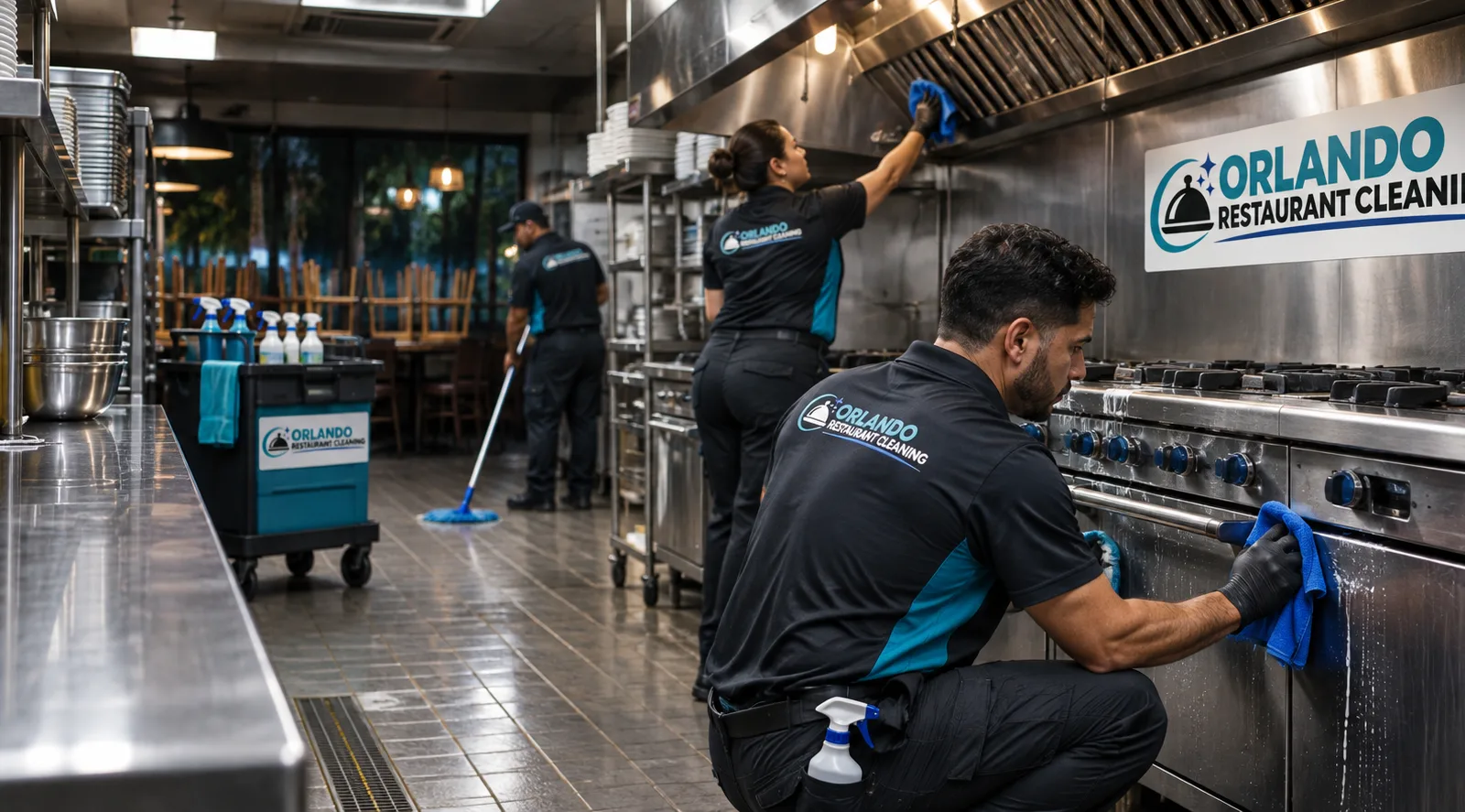
Orlando Restaurant Cleaning provides restaurant deep cleaning services for independent restaurants, cafés, bars, hotel kitchens and multi-unit operators. Work can cover the back of house, walk-in refrigeration, dining areas, storage spaces and elevated surfaces. Before service begins, the scope should identify what will be cleaned, which equipment may be moved, which areas require staff access and when each space will be ready for use.
We are Orlando's restaurant service specialists, planning the work around active food-service environments rather than treating a restaurant like a general office. That means accounting for grease films, food debris, floor drains, cook-line access, sensitive refrigeration areas and the limited time between closing and the next shift. The result is a practical cleaning plan tied to your facility, schedule and priorities.
Orlando's hospitality market includes late-night venues around International Drive, high-volume restaurants near the Orange County Convention Center and compact kitchens in Downtown Orlando. These operating patterns affect crew timing, access and the order of work. Florida's heat and humidity also make prompt attention to moisture, food residue and refrigeration spaces especially important.
Degreasing and detailed cleaning can address cook-line surroundings, equipment exteriors, stainless steel surfaces, prep areas, walls, shelving, floors, base edges and accessible areas behind or beneath movable equipment.
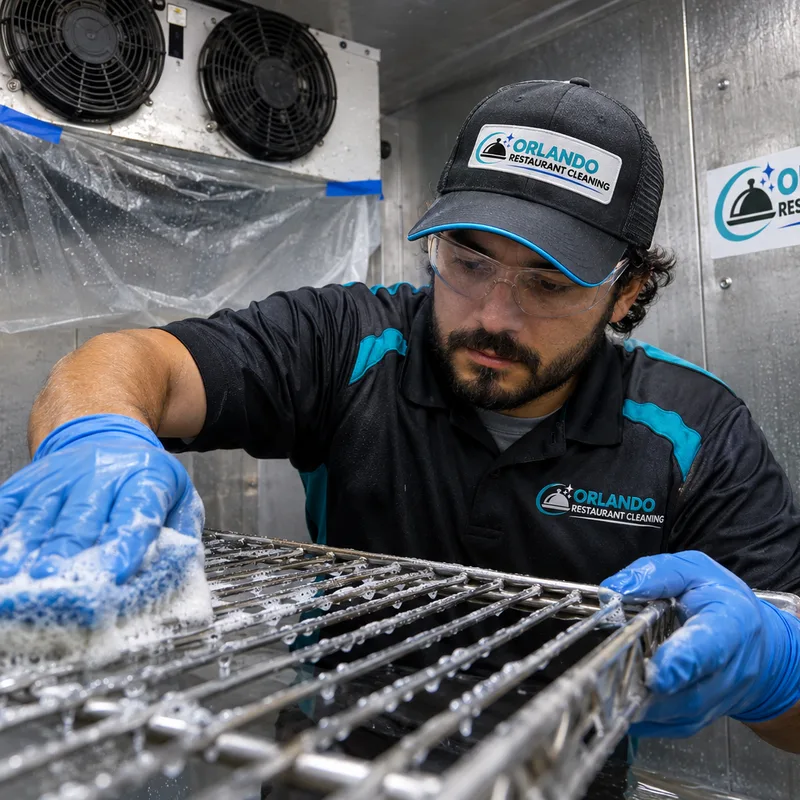
Walk-in cooler cleaning can include floors, walls, shelving and accessible door surfaces after food is removed or protected by restaurant staff. The scope should distinguish cleaning from refrigeration repair, mold remediation or food disposal.
High dusting removes settled material from accessible vents, ledges, beams, pipes and other elevated surfaces. Crews use suitable extension tools or access equipment while protecting food-contact surfaces beneath the work area.
Restaurant deep cleaners can address floors, baseboards, seating, partitions, fixtures and other agreed surfaces after guests leave. Materials such as wood, upholstery, tile and sealed concrete require different products and methods.
Detailed service may cover restroom fixtures, partitions, floors, touchpoints and staff areas within the agreed scope. Cleaning tools and chemicals are kept separate from those used around food-preparation surfaces.
A restaurant detailed cleaning plan can focus on buildup around casters, wall-floor junctions, shelving supports, splash zones and other places routine closing work may not fully reach.
Commercial kitchen deep cleaning starts with soil identification. Grease-heavy surfaces may need an appropriate degreaser and dwell time before agitation and removal. Food-contact surfaces require products and procedures suitable for their intended use, including any label-directed rinse or sanitation step. Cleaning and sanitizing are separate actions: soil is removed first, then an approved sanitizer is applied at the labeled concentration and contact time when sanitation is included.
Crews should avoid spraying electrical controls, pilot assemblies, motors and other sensitive components. Equipment is moved only when the scope permits it and the movement can be completed safely. Hood exhaust systems, ducts and fire-suppression components may require qualified specialty contractors; routine surface cleaning should never be presented as certified exhaust-system cleaning.
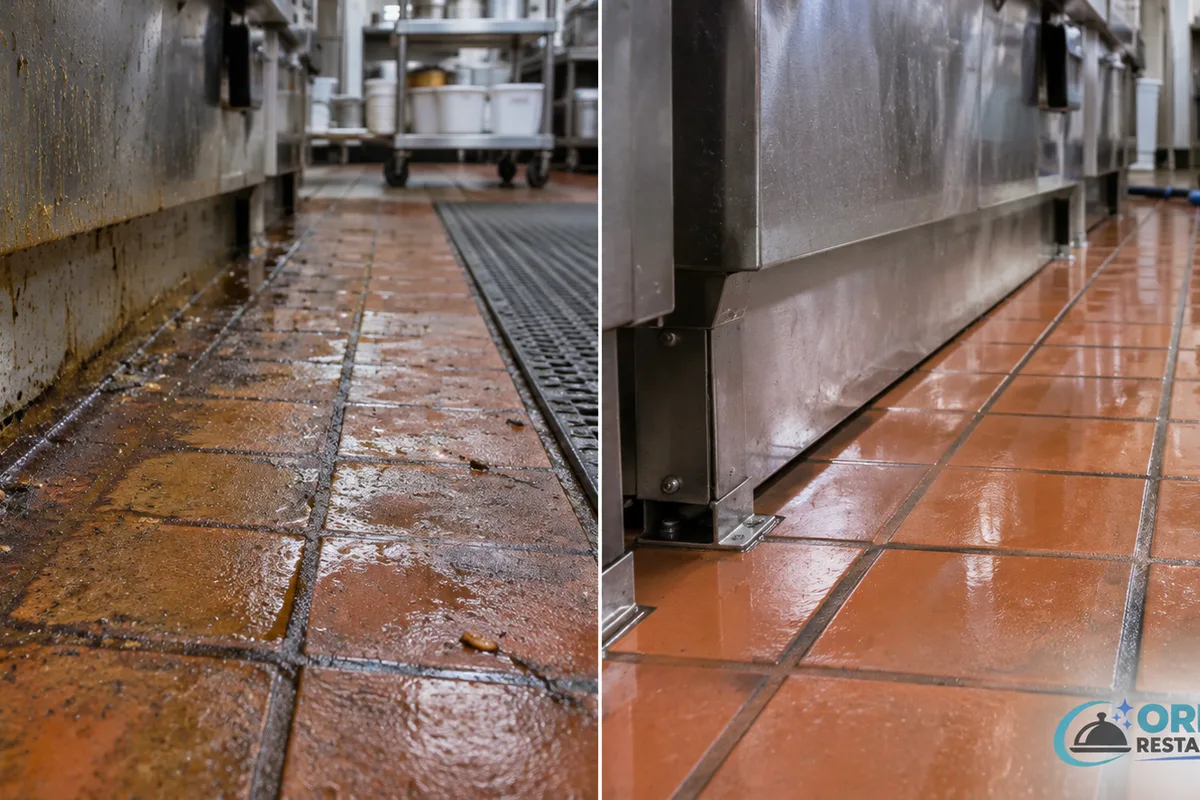
Floor work depends on the material and condition. Quarry tile and grout lines often hold greasy soil near the cook line, while sealed concrete and resilient flooring need compatible chemistry. Wastewater must be controlled so it does not spread contamination or enter areas where it does not belong. Orlando Restaurant Cleaning confirms access, water availability, equipment limitations and reopening needs before the crew starts.
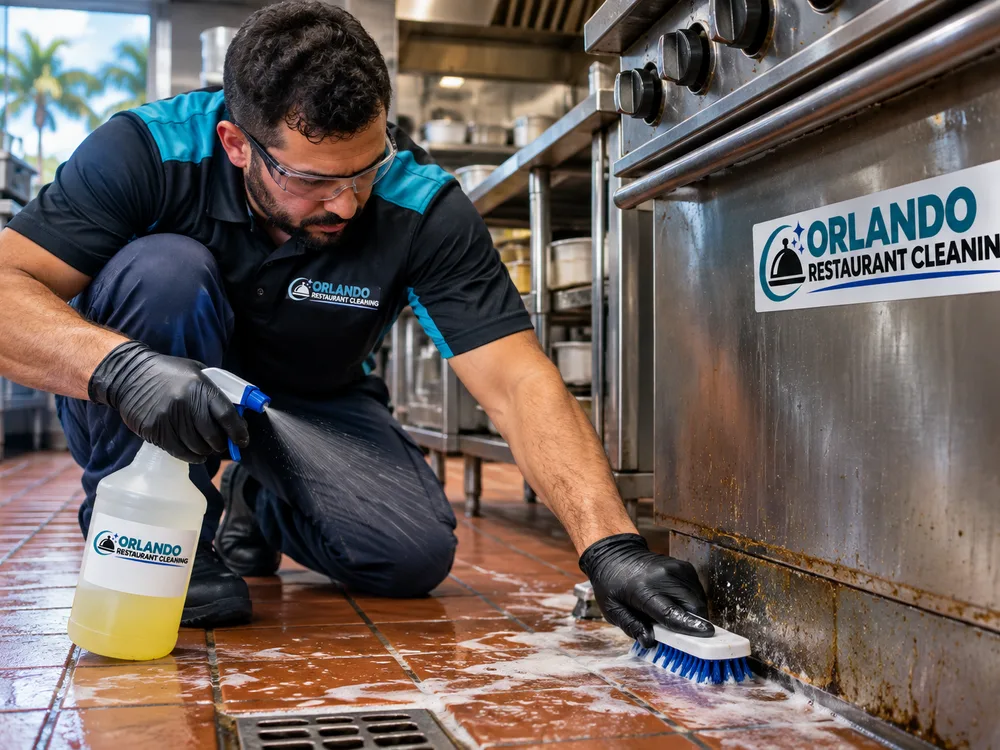
The first step identifies priority areas, surface materials, equipment restrictions, water and power access, security procedures and the time available between closing and reopening.
The service plan lists included spaces and tasks, preparation responsibilities, exclusions and any surfaces requiring special care. This creates a shared reference for managers and the cleaning crew.
Restaurant staff remove or secure food, smallwares and personal items as agreed. The crew sets up tools, isolates work zones and protects nearby surfaces before wet or overhead work begins.
High surfaces are normally handled before lower surfaces and floors so dislodged dust can be collected later. Grease removal follows product directions for dilution, dwell time and surface compatibility.
The crew and designated restaurant contact review the agreed areas, note any inaccessible or damaged surfaces and confirm that tools, moisture and cleaning materials have been cleared before turnover.
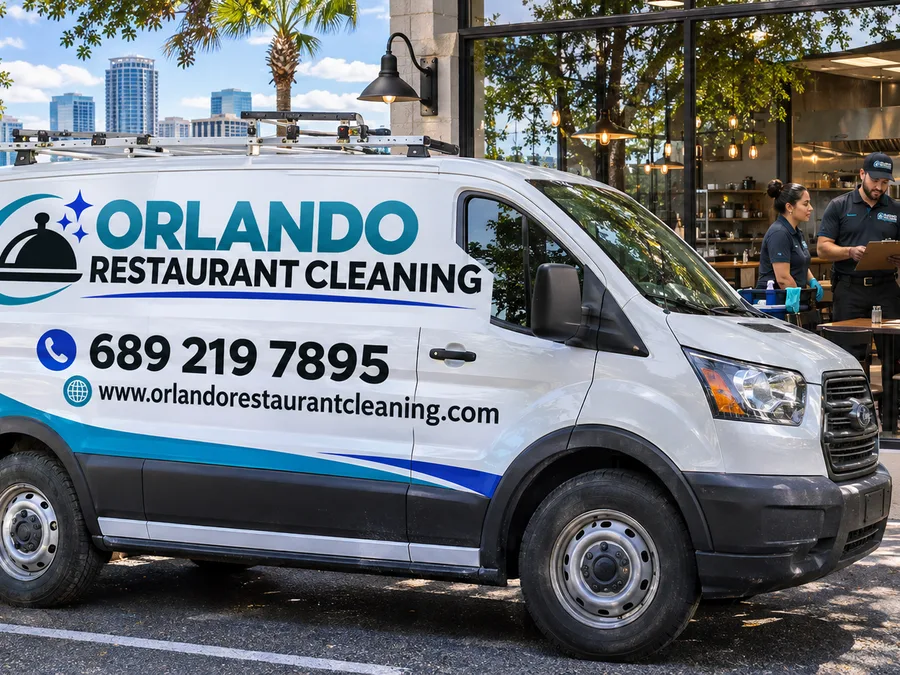
The best service window depends on closing time, delivery schedules, kitchen preparation and how long cleaned surfaces need before normal use. Downtown Orlando venues may have tight loading access and limited staging space, so the crew needs a clear entry plan. International Drive restaurants often work around long guest-service hours and visitor traffic. Restaurants near the Orange County Convention Center may need cleaning coordinated around event-driven volume rather than a fixed weekly pattern.
Recurring service is useful when the same areas collect soil between routine shifts. Periodic kitchen deep cleaning can be scheduled by area, such as alternating cook-line detail work, high dusting and walk-in cooler cleaning. A one-time professional restaurant deep cleaning may fit a reopening, management transition, menu change or concentrated reset. Frequency should reflect actual soil load, hours of operation and internal cleaning capacity rather than a generic interval.
Orlando's warm, humid conditions increase the need to manage wet work carefully. Floors, corners and refrigeration spaces should not be left with avoidable standing moisture. Cleaning can remove surface soil, but active leaks, damaged grout, failing seals, pest activity and mechanical problems need the appropriate repair or specialist.
Tell us which areas are causing problems, when the restaurant is available and what must be ready for the next shift. We will help define a practical cleaning scope before work begins.
Call for a Free QuotePricing depends on square footage, soil level, equipment access, included areas and the available service window. A small targeted job differs substantially from a full back-of-house deep clean with high dusting and walk-in work. An on-site assessment allows the quote to identify included tasks, preparation duties and exclusions instead of relying on a broad per-square-foot figure.
Yes, after-hours cleaning can often be arranged when access and reopening requirements are confirmed in advance. Orlando venues with late closing times or early food preparation may need phased work so one area can dry and return to use while another is being cleaned.
Restaurant staff generally need to remove, consolidate or securely protect food and movable inventory before walk-in cooler cleaning begins. The plan should also identify temperature-sensitive products, fixed shelving and any refrigeration components that must not be sprayed or disturbed.
Movable equipment may be repositioned when that task is included and it can be done safely. Hard-connected gas, electrical, plumbing or fire-suppression equipment should not be disconnected by a cleaning crew, and heavy units may require restaurant staff or a qualified trade to prepare access.
Yes, high dusting can be performed when food and food-contact surfaces beneath the work are removed or protected. The area should be closed to preparation and guest traffic during the task, and lower surfaces are cleaned afterward to collect dislodged material.
Surface cleaning around the hood does not automatically include the exhaust fan, ductwork or certified grease-removal service. Kitchen exhaust systems are specialized systems, so the written scope should state whether hood-system work is excluded or assigned to a qualified provider.
The interval should be based on cooking volume, grease production, operating hours, surface condition and what the in-house team handles each shift. A high-output cook line may need targeted attention more often than a low-grease preparation area, while elevated ledges may follow a separate schedule.
Yes, the scope can focus on a single problem area instead of the entire restaurant. Targeted restaurant deep cleaning in Orlando is often practical when the business has a short access window, a specific buildup issue or an internal team that already maintains other areas.
Share your priority areas, access window and operational concerns. Orlando Restaurant Cleaning will help define the tasks, preparation requirements and schedule for a clear written scope.